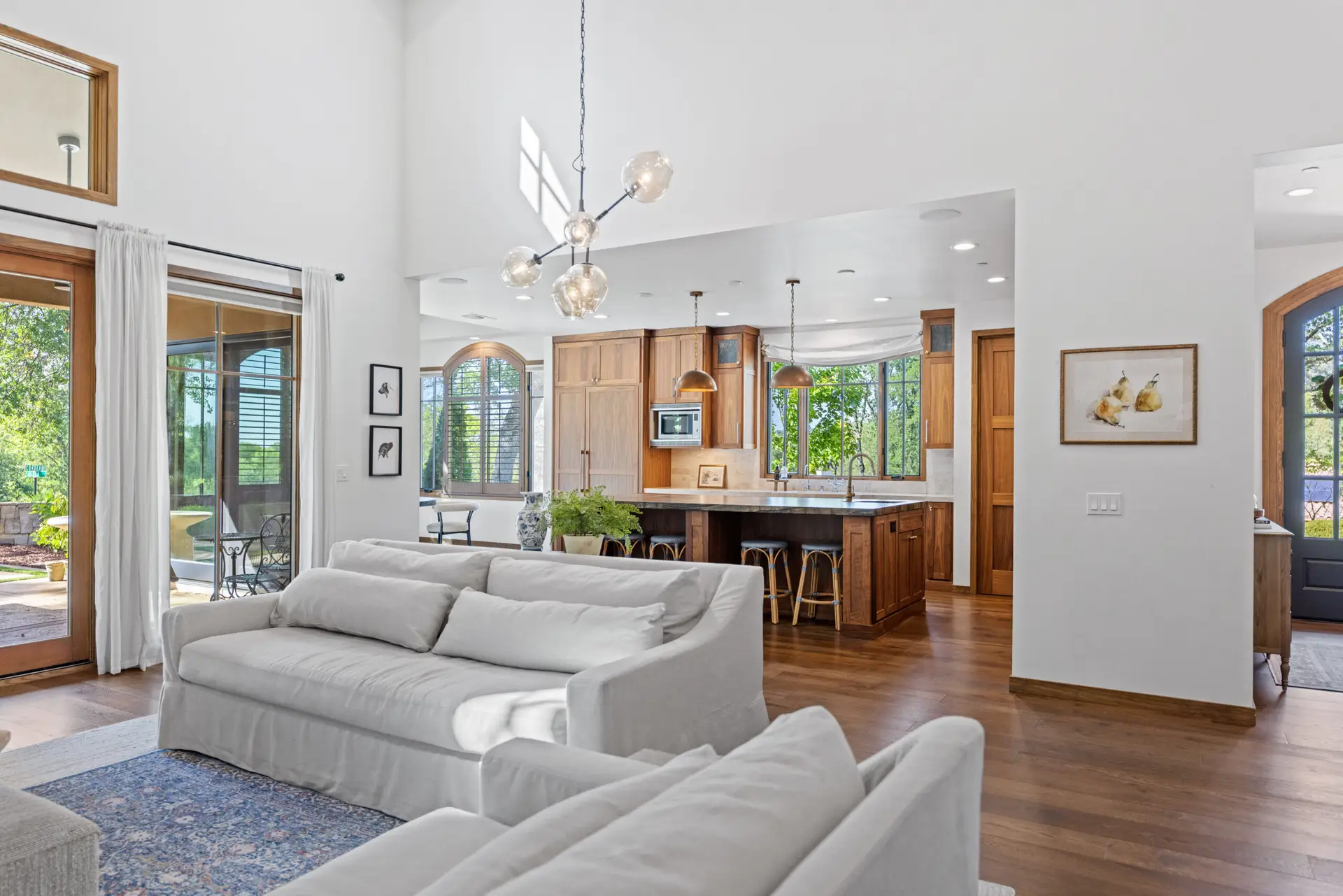
The Canon EOS R8 Mark II is Canon’s newest entry-level full-frame camera, and it was due in stores in late October. I have not shot a listing with one yet, so this is not a hands-on review. It is a practical look at the Canon EOS R8 Mark II for real estate photography, based on Canon’s published specs and early reviews, through the lens of what actually matters when you are photographing homes, rentals and commercial spaces around Sacramento.
What Canon Announced
Canon USA announced the EOS R8 Mark II on September 15, 2026, with an estimated price of $1,899 for the body and $2,099 for a kit with the RF 24-50mm F4.5-6.3 IS STM lens (Canon USA announcement). The key specs are:
- A 24.2 megapixel full-frame sensor, essentially the same sensor as the original R8
- 5-axis in-body image stabilization, which the first R8 did not have
- A multi-controller joystick on the back for moving the focus point, also new
- Uncropped 4K 60p oversampled from 6K, plus Full HD at 180p
- Wi-Fi 6 for faster transfers to a phone or router
- A body weight of about 1.2 pounds, which Canon says makes it the lightest EOS with IBIS
In its EOS R8 II review, DPReview calls the stabilization and joystick the two big fixes over the original, and notes that the 4K 60p video carries over from the first R8. Its main complaints are battery life and the limited choice of third-party autofocus lenses for the RF mount. Those points matter more for my kind of work than any of the speed numbers.
What Matters for Real Estate Photos
Real estate photography is slow, careful work. The camera sits on a tripod, I bracket exposures, and I spend more time on composition and light than on autofocus. So I look at a new body with a short list of questions.
Dynamic Range and Bracketing
Interiors with bright windows are the hardest part of the job. Most photographers blend bracketed exposures or use flash to hold window views and keep the room natural. DPReview found the R8 II’s image quality excellent, with high detail and low noise, and the same as the original R8 within the limits of its test scene. For MLS and most marketing use, 24 megapixels is plenty. Listing photos are usually displayed far smaller than that.
Lens Choice Matters More Than the Body
The kit lens starts at 24mm, which is not wide enough for most interiors. For real estate you want something in the 14mm to 16mm range on full frame. On the RF mount, the usual options are Canon’s RF 14-35mm F4 L IS USM and the lighter, lower cost RF 15-30mm F4.5-6.3 IS STM. If you are buying this camera for real estate, skip the kit and put that money toward a wide lens. Since DPReview points out how tightly Canon controls third-party RF lenses, check that the lenses you want exist before you commit to the system. My real estate photography gear guide covers the rest of a working kit.
Screen, Card Slot and Tripod Work
The 3 inch fully articulating screen is useful when the camera is low for a kitchen shot or high for a stairwell. Canon also moved the single UHS-II SD card slot from inside the battery compartment to the side of the grip, so you can swap cards without taking the camera off the tripod plate. That is a small change that real estate shooters will appreciate.
Battery and Single Card Slot
This is where I would be cautious. The R8 II uses the same small LP-E17 battery as the original, rated by CIPA at about 270 shots per charge with the rear screen and 150 with the viewfinder. Real world numbers are usually higher, but bracketing five frames per composition eats through that quickly. For a full day of listings, especially with video, plan on several spare batteries or a USB-C power bank. A single card slot also means there is no in-camera backup, so I would back up cards between appointments.
Settings I Would Start With
If you pick one up for interiors, here is where I would start:
- Shoot RAW on a tripod at ISO 100 to 400.
- Use aperture priority around f/7.1 to f/8 for depth of field from the foreground to the back wall.
- Set a three to five shot bracket, one or two stops apart.
- Use a two second timer or remote release so you do not shake the camera.
- Turn off stabilization on the tripod unless you have confirmed it behaves well when locked down.
- Keep the camera level and your verticals straight in the frame, which saves time in editing.
What Matters for Real Estate Video
The video specs did not change much on paper, but the in-body stabilization makes the camera more useful for video work. Uncropped 4K 60p means you can shoot slow, smooth walkthroughs without losing the wide field of view. Stabilization helps with handheld detail shots, though for walkthroughs I still use a gimbal. Full HD at 180p is useful for short slow motion clips, like water features or a door opening, that make a listing reel feel finished. DPReview also found rolling shutter well controlled, which helps keep vertical lines from skewing during pans.
For agents who want to shoot their own social clips between professional shoots, that combination of size, stabilization and 4K is the real selling point.
How It Compares to the Sony A7V
I reviewed the Sony A7V last year (read the Sony A7V review). The two cameras sit at different price points and aim at different buyers. The A7V is a higher resolution workhorse with more professional features. The R8 Mark II is a lighter, lower cost way into full frame. If you already own Canon RF lenses, the R8 Mark II is the easier upgrade. If you are starting fresh and plan to do this full time, compare the total cost of the body plus a wide lens in both systems before deciding.
Who Should Buy the Canon EOS R8 Mark II
- Newer real estate photographers moving up from APS-C who want full frame on a budget
- Agents and short-term rental hosts who want a compact camera for their own content and social video
- Working photographers who want a light second body or a dedicated video body
Who should probably pass: anyone who needs dual card slots for peace of mind, anyone shooting long days who does not want to manage batteries, and shooters who already have a capable full-frame body. With the same sensor as the original R8, the image quality jump for still interiors will be small.
My Take
The camera is only one piece of a good listing photo. Composition, light, window pulls, straight verticals, and an editor who knows MLS rules matter more. California now requires disclosure of digitally altered listing images under AB 723, which I explain in my AB 723 guide. Good gear makes the work faster and more consistent, but it does not replace experience on site.
Once I get my hands on an R8 Mark II, I will add real interior samples and update this post.
Book a Shoot
If you would rather leave the gear decisions to someone else, I photograph homes, rentals, commercial properties and new construction across Sacramento, Placer, El Dorado and Yolo counties. You can see what is included on my services page or the residential photography page, and book your shoot online in a few minutes.